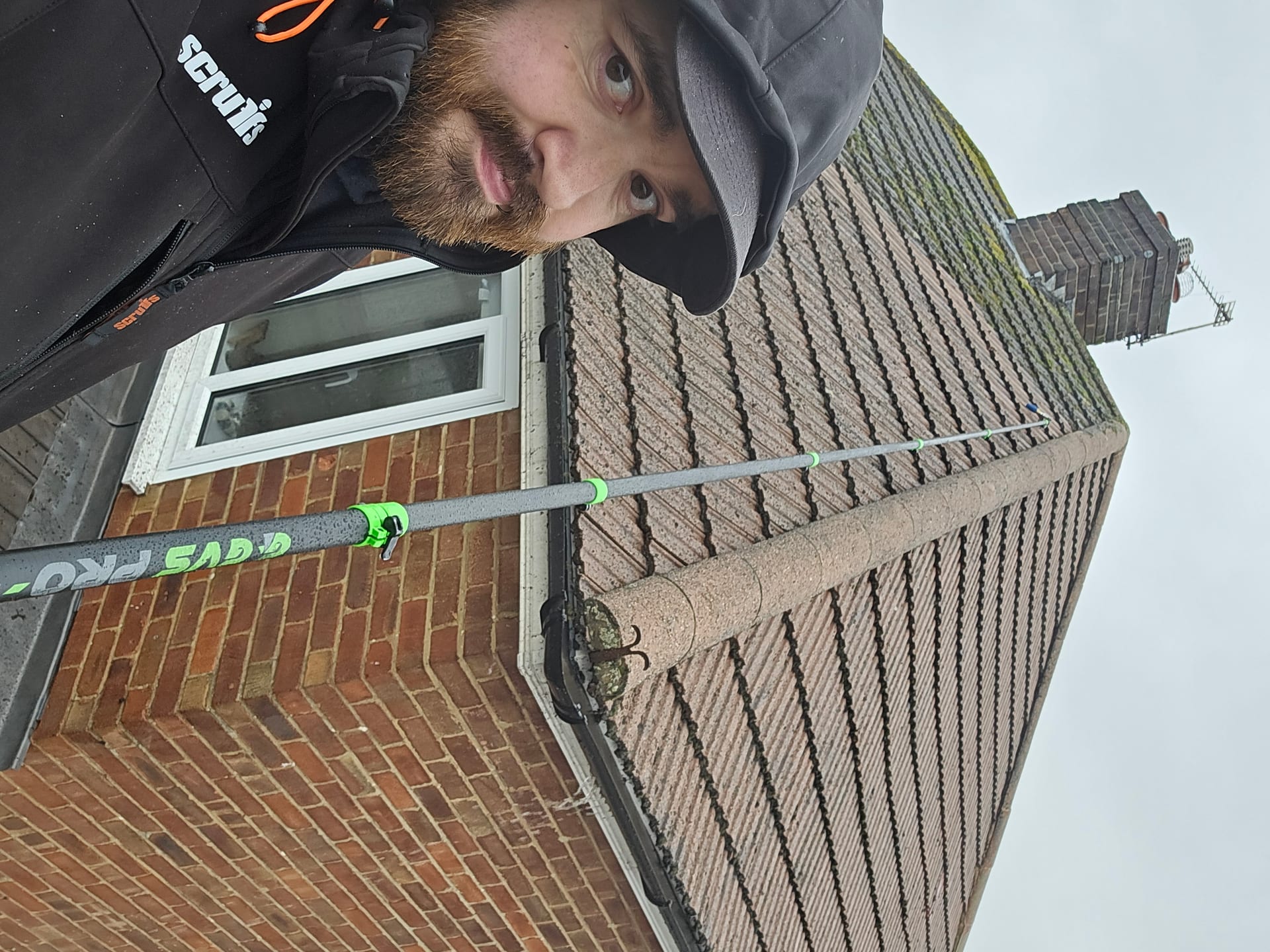
Moss on your roof isn't just cosmetic — it retains moisture that causes tiles to degrade and crack in winter frosts. We manually scrape, treat and prevent roof moss across Grimsby and Lincolnshire. Free quotes, fully insured.
Moss and lichen on roof tiles is a serious structural concern, not just an aesthetic one. Moss retains moisture against the tile surface — and when that moisture freezes and expands in winter, it causes the surface of concrete and clay tiles to degrade, crack and eventually fail. Left untreated, a mossy roof becomes an expensive repair job.
The correct approach for most roofs is manual scraping — physically removing moss before any washing or chemical treatment. This avoids forcing water under tiles and is far gentler on the roof structure than high-pressure washing alone. We follow scraping with a biocide treatment that kills remaining spores and significantly delays regrowth.
We also offer zinc or copper anti-moss strips that, once fitted to the ridge, leach trace amounts of metal in rainfall to inhibit future moss growth — one of the most effective long-term preventative measures available.
Get a Free Moss Removal QuoteWe assess tile type, extent of moss growth and roof condition from ground level and access points before any work begins.
Moss physically scraped from tiles using specialist roof tools — removing the bulk of growth before any washing or chemical treatment.
Loose debris rinsed down and cleared from gutters. A blocked gutter full of moss debris is a common follow-on problem we prevent.
Appropriate biocide applied to kill remaining spores and algae — significantly slowing regrowth compared to cleaning alone.
Zinc or copper anti-moss strips discussed and fitted if agreed. Ground cleared of all debris. Full walk-round with you to confirm results.
Moss acts like a sponge, holding moisture against the tile surface for long periods. When this moisture freezes in winter, it expands — and this freeze-thaw cycle gradually degrades the surface of tiles, causing spalling (surface flaking) on concrete tiles and cracking on clay and slate. Over several years this significantly shortens the life of your roof covering and can eventually lead to leaks.
High-pressure washing alone pushes water under tiles, can dislodge ridge mortar and may crack older tiles. Manual scraping removes the majority of moss without forcing water into the roof structure. On most domestic roofs we combine gentle scraping with lower-pressure rinsing and biocide treatment rather than relying on high pressure alone.
Biocide treatment significantly slows regrowth — most treated roofs see 3–5 years before moss becomes significant again. Anti-moss strips extend this further. Without treatment, moss can begin re-establishing within 12–18 months. Regular maintenance is much less costly than allowing moss to re-establish to the point where tiles are at risk.
Yes — we use appropriate ladders, roof ladders and safety equipment for all roof work. We are fully insured with public liability cover. We never walk directly on tiles unnecessarily and use ridge-mounted roof ladders when access is required on the roof surface itself.
Absolutely — moss removal is often done as part of a full roof clean that includes washing down the tiles and treating all algae and lichen as well as moss. We can quote for the full scope of work in a single visit, which is usually the most cost-effective approach.